Introduction
Tooth decay is a common dental problem that affects people of all ages. It happens when the hard surface of your tooth, called enamel, breaks down. This damage can lead to pain, infection, or even tooth loss. However, if you understand tooth decay early, you can stop it before it gets worse. Early action helps protect your smile and keeps your mouth healthy. In this blog, you will learn about the signs, causes, and ways to prevent tooth decay. You will also find helpful dental health tips to keep your teeth strong.
What Is Tooth Decay?
Tooth decay, also known as a cavity or dental caries, is the destruction of your tooth’s outer layer. This layer is called enamel. Bacteria in your mouth feed on sugars from food and drinks. As a result, they make acids that slowly eat away the enamel. Over time, this can create holes or soft spots in your teeth. If left untreated, tooth decay can reach deeper layers and cause more serious problems.
Early Signs and Symptoms
Spotting tooth decay early can save your teeth. Look for these signs:
Sometimes, you may not feel any pain at first. Still, regular dental check-ups help catch problems early.
Causes and Risk Factors
Many things can cause tooth decay. Here are the main reasons:
For example, children and older adults are at higher risk. People with certain health conditions may also have more tooth decay.
How Tooth Decay Progresses
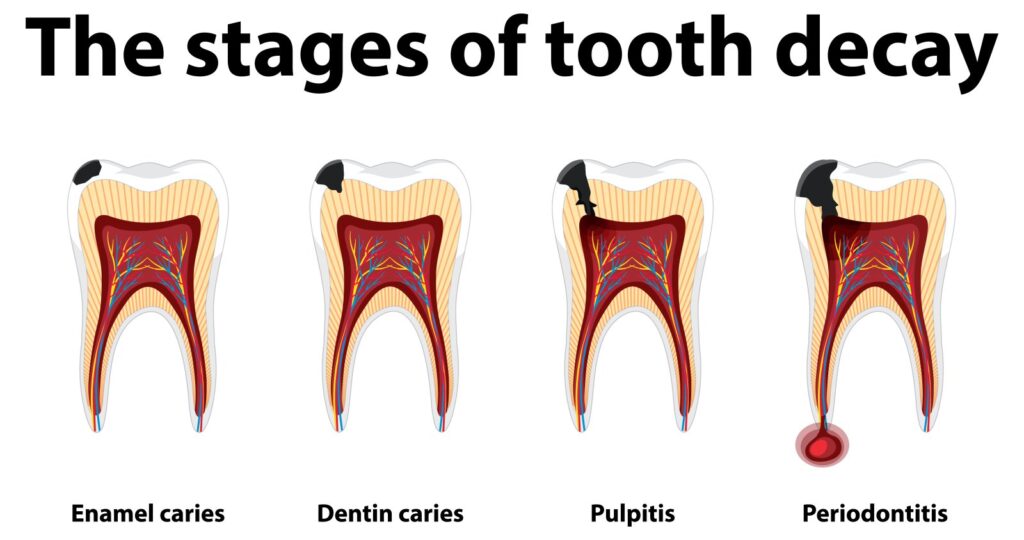
Tooth decay does not happen overnight. First, acids weaken the enamel. Next, small white spots appear. If not treated, these spots turn into cavities. Over time, decay can reach the inner part of the tooth, called dentin. Eventually, it may affect the pulp, which contains nerves and blood vessels. At this stage, you may feel severe pain or get an infection. In some cases, the tooth may need to be removed.
Diagnosis and When to See a Dentist
Early diagnosis is key to stopping tooth decay. Dentists check your teeth during regular visits. They may use special tools or X-rays to find hidden cavities. If you notice pain, sensitivity, or spots on your teeth, see a dentist soon. Waiting too long can make the problem worse. The CDC and dental experts recommend seeing your dentist at least twice a year.
Treatment Options
Treatment depends on how much damage there is. Here are common options:
For mild cases, simple changes in your daily care can help stop decay from getting worse.
Prevention Tips for Healthy Teeth
Preventing cavities is easier than treating them. Try these dental health tips:
With these habits, you can keep your teeth strong and healthy for life.
Frequently Asked Questions (FAQs)
If you notice any signs of tooth decay, consult at Soft Smiles Dental for personalized care.